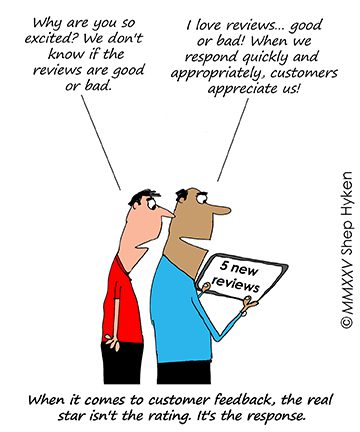
 It’s one thing to listen to what your customers say about you online. Many customers prefer to “go social” and comment on social media, review sites, and online forums.
So the question is from Shep Hyken, “Are you listening?”
By “listening,” Shep means social listening, paying attention to what customers are saying about you everywhere except directly to you.
In the past month, Shep has been asked about social listening, responding to surveys, and monitoring online comments and reviews. However, Shep emphasizes that comments and reviews are not limited to the typical review sites, such as Google, Yelp, TripAdvisor, and others. Your customers will also share comments on Facebook, Instagram, and other social media sites.
So, even though we call it social listening, a better name might be social reacting. If you take the time to “listen,” which means reading or watching what customers are saying about you, it is in your best interest to react with an appropriate response.
While Shep believes you should respond to all comments and reviews, it’s especially important to respond to the negative. By the way, negative reviews aren’t so bad. In one of his articles about embracing negative reviews, Shep mentioned that a perfect five-star rating causes some customers to think, “This is too good to be true.” Perfection is not reality, and customers know this.
With that in mind, here are five social reaction strategies and tactics:
React to Positive Comments: A short thank you is appropriate. If you can personalize it, even better.
React to Negative Comments: As mentioned, it’s especially important to respond to negative reviews and comments, and I’ll add, in a timely fashion. The sooner the better. This adds a sense of urgency and creates credibility. If possible, take the complaint “offline” and deal directly with the customer. Then return to the site where the comment or review was first shared and let the world know you resolved the issue.
React to Unreasonable Comments: Not every comment will be reasonable. Some people will be unreasonable. A simple and professional response is appropriate. Offer a way for the customer to contact you directly. Don’t be defensive, or you’ll add fuel to the fire.
It’s Okay to Use AI and Templates When Reacting: Depending on how many comments you get, AI and templates can save you time. But, make sure to customize them to the situation. Don’t just copy and paste comments. Customers will notice.
Treat Customer Comments as Learning Opportunities: This idea goes beyond social channels and review sites. Any comment that comes your way, positive or negative, is a learning opportunity. If you get negative feedback, find ways to prevent it from happening again. If the feedback is positive, find ways to make sure it always happens.
Companies spend a lot of money to get customers to notice them through marketing and advertising. Don’t waste that investment by not considering social reacting as part of your marketing and CX plan.
Shep Hyken is a customer service/CX expert, award-winning keynote speaker, and New York Times bestselling author. Learn more about Shep’s customer service and customer experience keynote speeches and his customer service training workshops at www.Hyken.com. Connect with Shep on LinkedIn.
James P. Randisi, President of Randisi & Associates, Inc., has been helping employers protect their clients, workforce and reputation through implementation of employment screening and drug testing programs since 1999. This post does not constitute legal advice. Randisi & Associates, Inc. is not a law firm. Always contact competent employment legal counsel. To learn more about the rights of employees who test positive for marijuana, Mr. Randisi can be contacted by phone at 410.494.0232 or Email: info@randisiandassociates.com or the website at randisiandassociates.com